

Contact Us Blog Servicing Areas

Education

Cannabinoids, edibles and chocolate science

Straightforward information about cannabinoids, edible and extract formats, and how a precise dose is actually carried. Written for adults 19+ and for the retail professionals who answer questions about our products.

3

Cannabinoids covered

2

Formats explained

4

Topics in depth

01

Cannabinoids explained

What cannabinoids are, and which ones appear in our products.

Cannabinoids are a family of compounds produced by the cannabis plant. More than a hundred have been identified. A small number are present in quantities large enough to be isolated and formulated with, and those are the ones the industry works with in practice.

THC

0 to 9.5 mg a piece, depending on the collection.

CBD

Paired with THC in MICRO ZEN, ZEN DARK and BYTE.

CBG

Paired with THC in MICRO ZEST; alone in ZERO ZEST.

THC and CBD are the two most familiar. CBG is a third, present in much smaller amounts in most plant material, which is part of why it appears less often in finished products. Across our range we formulate with THC and CBD, THC and CBG, and with CBG.

Cannabinoids are lipophilic, meaning they associate with fats rather than dissolving in water. That single property explains a great deal about how edible products are built, and it is why a fat-based medium like cocoa butter is a sensible carrier.
02

How edibles work

The mechanical difference between an edible and an inhaled format.

An edible is processed differently from an inhaled product because it takes a different route through the body. Anything swallowed passes through the digestive system and the liver before it enters general circulation, which is not the case for something inhaled.

Two practical consequences follow. The first is timing: the digestive route takes substantially longer than inhalation, and how long depends on the individual and on what else they have eaten. The second is that the same declared amount of a cannabinoid behaves differently by format — an edible milligram and an inhaled milligram are not interchangeable units.

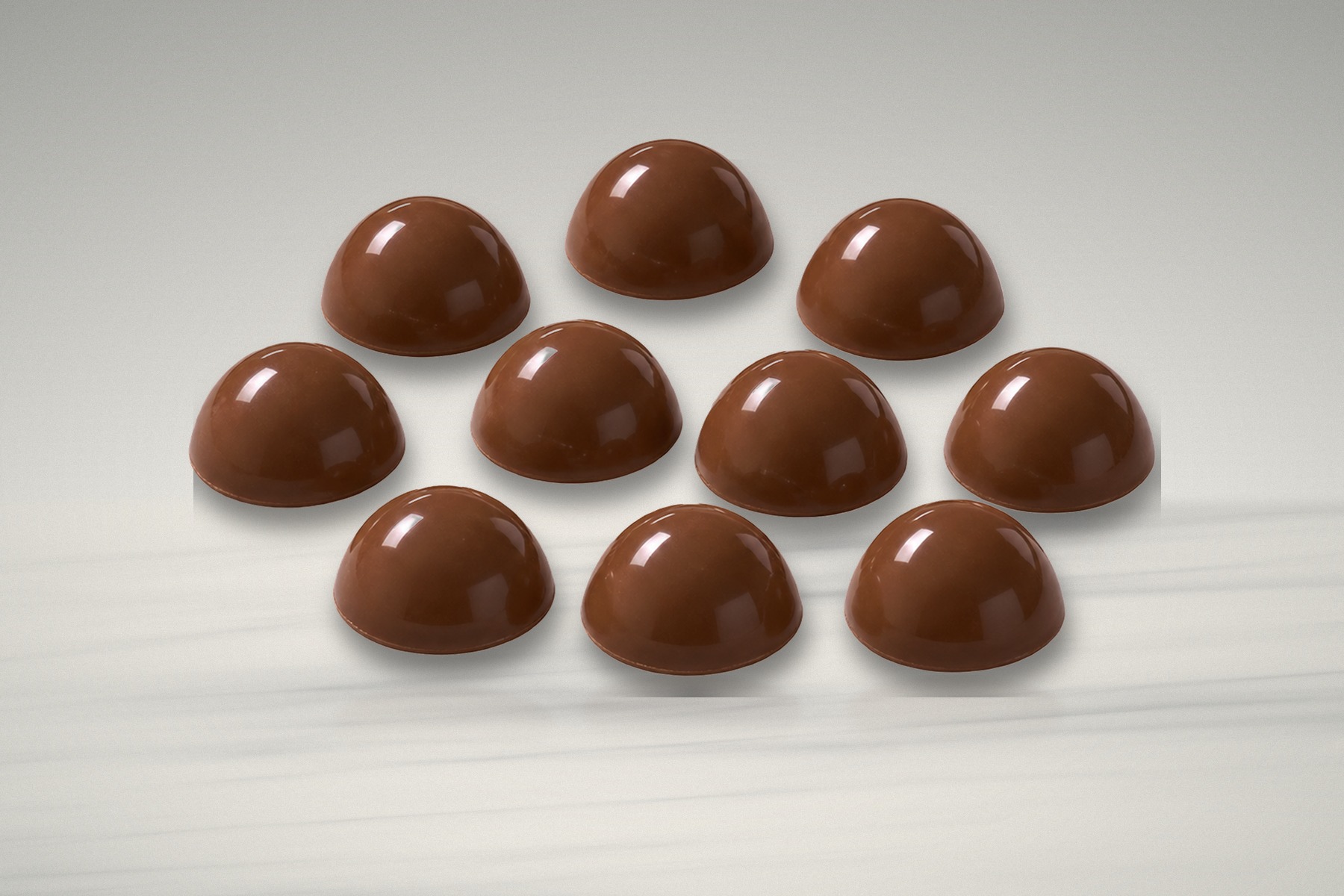
The ten milk chocolate pieces in a pack of MICRO ZEN
Ten pieces to a pack. In a measured format the declared figure only means something if every piece matches the last one.

This is the reason precision matters so much in an edible. Because the response is delayed and format-dependent, the declared figure on the package needs to be accurate and the units need to be consistent with each other. That is a manufacturing responsibility, and it is the problem our formats are built around.

Health Canada caps a package of edible cannabis at 10 mg of THC. That cap is the regulation; how finely it is divided is the format decision. Our Micro collection divides it into ten pieces of 1 mg. Byte divides the same cap into two pieces of 5 mg. Our Zero collection carries no THC at all, so the cap does not bind it. That division is the part we engineer.

03

Differences between THC and CBD

Two cannabinoids, commonly named together and frequently confused.

THC and CBD are both cannabinoids and they are chemically similar, but they are not the same compound and they are not regulated identically. THC is the compound that products carrying the standardized cannabis symbol are labelled for, and its content must be declared on every package.

CBD is a separate cannabinoid, also declared on the label, and it is not the compound the symbol is concerned with. Products are frequently described by the ratio between the two — a balanced product carries them in equal measure, which is how MICRO ZEN is formulated at 1 mg of each. MICRO ZEN DARK holds the same 1 mg of THC and raises the CBD to 5 mg, and BYTE pairs 10 mg of CBD with each 5 mg THC piece. The ratio is a formulation choice, not a measure of strength.

CBG is a third cannabinoid, chemically distinct again. It appears across our range at very different loadings: 1 mg alongside THC in MICRO ZEST, 5 mg in MICRO ZEST RASPBERRY, and 20 mg a piece with no THC at all in ZERO ZEST.

We describe what is in a product and in what quantity. What these compounds do in the body is a matter for researchers and for regulated health information — not something a licensed producer may characterise, and not something we will speculate about here.

04

Tablets and chocolate compared

Two oral formats, the same digestive route, and quite different reasons to choose one.

An infused chocolate and an oral tablet are both swallowed, so they take the same route through the body: digestion first, then the liver, then general circulation. Everything written above about timing applies to both equally.

What differs is the carrier. A chocolate carries its cannabinoid in cocoa butter, which is a fat, and fat is what a lipophilic compound disperses into naturally. A tablet is a compressed solid with no fat phase at all, so uniformity has to be achieved in the powder blend and held through compression instead. Neither is easier; they are different manufacturing problems with the same acceptance criterion.

The practical differences are the ones a consumer notices. A chocolate has flavour and is eaten as a confection. A tablet has effectively none and is not. A Micro piece carries 1 mg of THC; an XTRACT tablet carries 9.5 mg, and there are fifty of them in a jar. Neither figure is better than the other — they answer different questions.

Format also decides what has to be carried around. A tablet needs no dropper, no measuring step and no device. That is a convenience argument rather than a claim about what the product does, and it is the honest reason the format exists.

05

Reading the numbers on a package

Written for retail staff. What each declared figure on a cannabis package is actually telling you.

Every legal cannabis package in Canada declares its cannabinoid content, and the figures follow rules rather than marketing. Knowing which figure answers which question is most of what a customer is really asking at the counter.

Total THC is the figure the package cap applies to. For an edible, Health Canada caps it at 10 mg for the whole package — not per piece. A pack declaring 10 mg of total THC is at the legal maximum whether it holds two pieces or ten, and that is the single most common point of confusion on a shelf.

1111111111 One package — the 10 mg of THC a regulated edible package may contain Ten units × 1 mg — the increment we engineer
Regulation decides what a package may hold. The format decides how finely that is divided, and a consistent 1 mg unit is the harder manufacturing problem.

Per-piece content is the figure that actually governs how someone uses the product, and it is the one worth pointing at. Ten pieces at 1 mg and two pieces at 5 mg are the same 10 mg package with completely different increments. The increment is the product decision; the total is the regulation.

Other cannabinoids — CBD and CBG in our range — are declared separately and are not capped the way THC is. That is why a package can carry 400 mg of CBG and 0 mg of THC without breaching anything, and it is worth knowing before a customer asks why one number is so much larger than the other.

The remaining marks are regulatory rather than informational: the standardized cannabis symbol appears where a product contains THC, the excise stamp shows duty has been paid, and the lot number identifies the specific production run. If a customer asks where the declared figures come from, the answer is laboratory analysis of that lot.

06

Chocolate formulation science

Why chocolate, and what makes a cannabinoid chocolate difficult to make well.

Chocolate is roughly a third cocoa butter, and cocoa butter is a fat with an unusually well-defined melting behaviour. That makes it both an excellent carrier for a lipophilic compound and a demanding medium to work in, because its crystal structure has to be controlled precisely.

Tempering is the controlled heating and cooling cycle that sets cocoa butter into the crystal form that gives chocolate its snap, its surface and its stability. Introducing a cannabinoid extract into that system affects how it behaves, so the formulation and the tempering have to be developed together rather than in sequence.

Stirred into finished chocolate Built into the cocoa butter first
The same quantity of cannabinoid, distributed two ways. Once chocolate sets, whatever distribution existed in the batch is locked into the individual units — which is why the extract is built into the fat phase before it becomes a confection.

The distribution problem is the central one. A batch has to be homogeneous before it is moulded, because once it sets, whatever variation exists is locked into individual units. Building the extract into the cocoa butter at the start is how that is addressed.

Flavour is the last constraint. Cannabis extract has a character of its own, and the usual way to cover it is sugar. Working with milk chocolate and with yuzu citrus is an attempt to balance it instead — a formulation decision rather than a masking one.

We describe what is in a product, in what quantity, and how it was verified. What it does is not ours to characterise.

This page is general information about legal cannabis products in Canada. It is not advice, it makes no claims about effects, and it is intended only for adults of legal age.

More from the lab

Longer reads on formulation, extraction and how legal edibles are made in Canada.

Read the blog

Questions

Common questions

Who is this material written for?

Adults of legal age, and the retail staff who answer questions about our products at a counter. Several pieces are written specifically for budtenders.

Does it tell me what the products do?

No. It explains what cannabinoids are, how the formats are built and what the declared figures mean. It makes no claims about effects.

What is the difference between an edible and an extract tablet?

The route through the body is the same — both are swallowed. The carrier is different, which changes how the product is manufactured and what a consumer is choosing between.

Can I use this with my staff?

Yes. Registered retailers can also reach a fuller education kit through the retail login, including counter cheat sheets and comparison charts.