

Icicles on the Eaves Are a Symptom. Here Is What They Are Telling You.
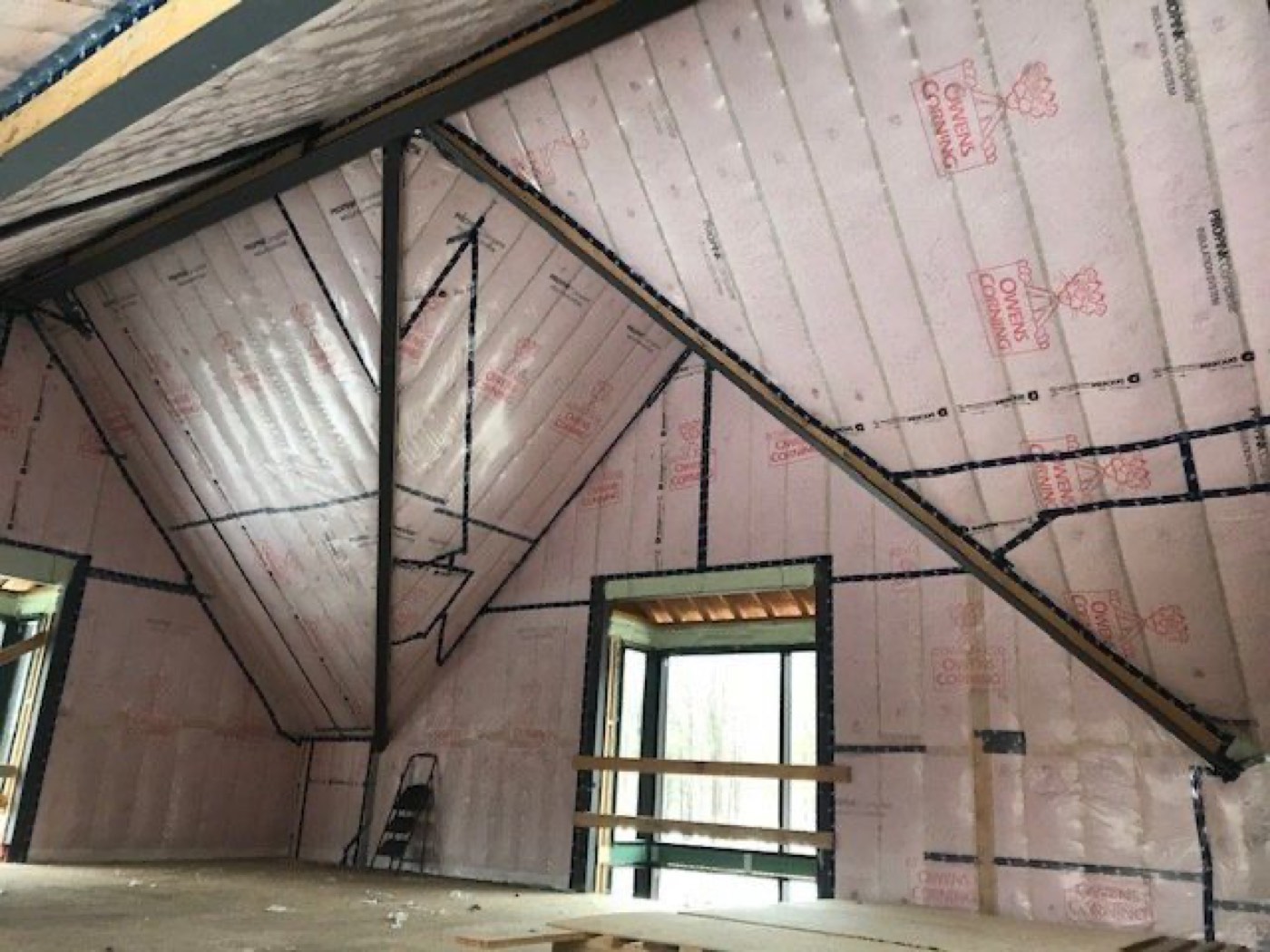
Ice damming is not a roof problem, a gutter problem, or bad luck with the weather. It is heat and air escaping into your attic.
Every February we get calls about the same thing: a ridge of ice along the eaves, icicles hanging off the gutters, and water finding its way somewhere it should not be. Most people assume it is a roofing problem. It is almost always an insulation and air sealing problem.
The mechanism
Heat escaping from the living space warms the underside of the roof deck. Snow on the warm part of the roof melts, and the water runs down until it reaches the eaves — which overhang unheated space and stay cold. There it refreezes, building a dam. The next round of meltwater backs up behind that dam and sits on the roof, where shingles were never designed to hold standing water. It works its way under, and shows up as a stain on a bedroom ceiling.
Where the heat is getting up there
- Attic bypasses — the attic hatch, top plates, plumbing stacks, wiring penetrations, and pot lights, all leaking warm air directly into the attic.
- Insufficient or settled insulation — decades-old attic material that is now at half its original depth.
- Blocked soffit vents — insulation stuffed into the eaves with no baffles, which cuts the ventilation that keeps the roof deck cold.
- Bathroom and kitchen fans venting into the attic instead of outside, which adds heat and a great deal of moisture at once.
- Ductwork or mechanical equipment in the attic that is leaking conditioned air.
Why it is worse in this area
Barrie and the surrounding townships get long stretches of cold with heavy snow cover on the roof, followed by sun and freeze-thaw swings. That is the ideal recipe: snow to melt, cold eaves to refreeze on, and enough cycles to build a substantial dam.
What actually fixes it
- Seal the bypasses first. Air leakage is usually the largest single contributor, and it is the cheapest thing to correct.
- Get the insulation to full, even depth. If what is up there is settled, contaminated or wet, remove it rather than burying it.
- Restore the ventilation. Baffles at the eaves keep the soffit intake clear so the roof deck stays cold.
- Duct the fans outside. Every bath fan, properly terminated through the roof or the wall.
What to do right now if you already have one
Mid-winter, when there is already a ridge of ice on the eaves and a stain spreading on a bedroom ceiling, you are managing a symptom rather than fixing a cause. A few things are worth knowing:
- Do not chip, hammer or chisel at the ice. Shingles are brittle in the cold and you will do more damage than the water was going to.
- Clearing snow from the lower few feet of the roof with a roof rake, from the ground, removes the fuel for the next melt cycle.
- Keep an eye on the interior. Water tracking down inside a wall matters far more than a small ceiling stain.
- Book the assessment for the same winter. An attic under load tells you far more than an attic in July.
The order the repairs should happen in
Every ice damming job follows the same sequence, and doing it out of order wastes money:
- First, look. Get into the attic and find where the heat and air are actually getting in — the frost patterns on the underside of the sheathing usually show you.
- Second, remove if you have to. If the insulation is wet, contaminated or hopelessly compressed, it comes out. It is also the only chance you will get to see and seal the ceiling plane.
- Third, air seal. Every bypass — top plates, the hatch, plumbing stacks, wiring penetrations, pot lights.
- Fourth, fix the mechanicals. Every bath and range fan ducted properly to the outside.
- Fifth, restore the ventilation. Baffles at the eaves so the soffit intake is not buried by the new insulation.
- Last, insulate. To a current, even, measured depth, with depth markers so it can be checked in ten years.
What it costs you to leave it
Ice damming is rarely just a roof problem by the time it is visible. Water that backs up under shingles goes into the sheathing, the insulation below it, and eventually the ceiling and the wall. Wet insulation loses its R-value, so the cold spot that caused the dam gets worse each year — the problem accelerates.
The same heat loss also shows up on your bill every single day of the season, dam or no dam. That is the part worth remembering: this is not a repair, it is an upgrade that happens to stop a leak.
Done together, these stop the melt at the source. The same work that ends the ice damming is the work that lowers the heating bill — which is why we would rather look at an attic in February than in July.
Questions about your own building? Call (705) 812-1955 or request a free quote — we serve Barrie, Simcoe County & the Kawartha Lakes area.