

Attic Insulation: When to Top Up, and When It All Has to Come Out
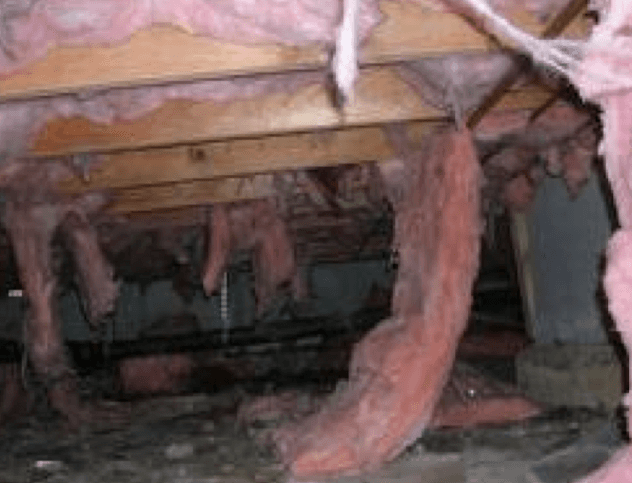
Adding a foot of new insulation on top of a bad attic is the most common money-wasting decision in this trade. Here is how to tell which situation you are in.
Every quote season we get the same call: the heating bill has climbed, somebody said the attic needs more insulation, how much to blow another foot in? Sometimes the answer really is that simple. Often it is not, and blowing new material over the top of the existing layer buries a problem that will cost far more later.
Here is the decision the way we make it, standing in the attic with a flashlight.
When a top-up is the right call
Topping up is straightforward and cost-effective when all of the following are true:
- The existing insulation is dry — no staining, no matting, no musty smell.
- It is clean — no droppings, no nesting material, no sign anything has lived up there.
- It is evenly distributed and simply not deep enough by today's standards.
- The soffit vents are clear, or can be cleared and baffled.
- The bathroom and kitchen fans vent outside, not into the attic space.
- There are no signs of past roof leaks on the underside of the sheathing.
In that situation, blowing to a current, even depth is exactly the right work, and the payback is good. Most attics built before the 1990s are candidates simply because standards have moved and loose fill has settled.
When it all has to come out
Removal is the honest recommendation when the material itself has stopped being insulation, or when it is hiding something.
Pests
Mice, bats, red squirrels and raccoons all treat attic insulation as bedding. What they leave behind is not just unpleasant — droppings and urine-saturated material are a health issue, and the smell finds its way into the house through the same air leaks that let the heat out. Adding clean insulation on top does not contain any of that.
Critically, removal is only worth doing after the entry points have been sealed. Clearing the attic while the way in is still open resets the clock and nothing more.
Water
If there has ever been a roof leak, an ice dam that backed up, or a plumbing stack that let go, the insulation in that area has been wet. Wet fibre stays wet a long time in a cold attic, loses effectively all of its R-value, and grows mould on whatever organic material is nearby.
Age and disturbance
Insulation that has been walked on, pushed aside for wiring, and compressed over forty years is no longer performing at anything close to its label. In an attic that has had several trades through it, the coverage is often wildly uneven — deep in the middle, bare at the edges where it matters most.
What removal actually involves
The material is vacuumed out through a hose that runs to a sealed collection unit outside — it does not get carried through your hallway in bags. The route through the house is protected and contained, and the debris leaves with us.
The valuable part is what happens next, while the attic is empty and everything is visible for the first time in decades:
- Baffles go in at the eaves so the soffit intake stays clear once the new insulation is blown.
- Bath and range fans get ducted properly to the outside instead of dumping warm, wet air into the attic.
- Rodent entry points get identified so the problem does not simply come back.
- Any leak or sheathing damage is visible and can be dealt with before it is buried again.
- Attic bypasses — the top plates, the hatch, plumbing stacks, pot lights — can be air sealed before the new insulation goes down.
The honest version of the cost question
Removal plus re-insulation costs more than a top-up. It is not close. But the comparison that matters is not top-up against removal — it is a top-up that buries a wet, contaminated or deficient attic against a job that actually fixes it.
We quote both together so you can see the full picture and decide with real numbers rather than a guess. And when the attic genuinely just needs more depth, we say so.
Questions about your own building? Call (705) 812-1955 or request a free quote — we serve Barrie, Simcoe County & the Kawartha Lakes area.