

Drill and Fill: Insulating the Walls of an Older Home Without Gutting It
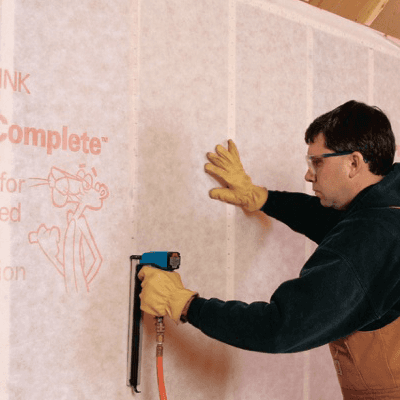
If your walls are cold to the touch in February, there is a good chance there is nothing inside them. You do not have to tear the house apart to fix that.
Put your hand flat on an exterior wall in your house on a cold day. If it is noticeably colder than an interior wall, and if the room never quite holds its heat no matter what the thermostat says, the odds are good that the wall cavity behind that drywall or plaster is empty.
That is not unusual in this area. Plenty of the housing stock around Barrie and the older parts of Simcoe County predates any real expectation that walls would be insulated at all.
What older walls were actually built to do
Homes from the balloon-framing era typically had no wall insulation whatsoever. They relied on a double wall system with an air gap between the layers, and that trapped air was the insulator of its day. It was a reasonable idea when fuel was cheap and expectations were lower.
The trouble is that an air gap in a wall is not still air. It convects — warm air rises on the inside face, cools against the outer sheathing, drops, and circulates. Instead of insulating, the cavity quietly moves heat from inside your house to the outside of it, all winter.
How drill-and-fill works
The process is straightforward, and it is over faster than most people expect.
- We locate the studs and map out the cavities so every bay gets filled — including the short ones above and below windows.
- A 2" access hole is drilled into each cavity, typically from inside the home and only rarely from the outside.
- Blown fibreglass is injected through a hose until the cavity is packed to the manufacturer's specified density — not just filled until it looks full.
- The holes are plugged and patched.
Because the work is normally done from the interior, your siding, brick or stucco is usually never touched. That matters on a house with original brick or a finish that cannot be matched.
Why density is the whole job
Anyone can blow fibre into a hole until it stops going in easily. The difference between a retrofit that works and one that disappoints is whether the cavity was filled to density, all the way up, in every bay.
Blown to the right density, the material will not settle and leave a cold strip along the top of the wall a few winters later, and it will not absorb moisture — so it does not create the mould and mildew problems that badly done wall retrofits are known for.
What you can expect afterwards
Wall retrofits change how a house feels more than almost anything else we do, because exterior walls are the largest surface in most rooms. The wall stops being a cold surface radiating away your body heat, which is why rooms feel warmer at the same thermostat setting than they did before.
Drafts settle down as well. In an empty-cavity house, air moves inside the walls between floors and out through every gap, and filling the cavity slows that circulation dramatically.
The sound benefit is a bonus people rarely anticipate. A filled cavity cuts road noise and outside sound noticeably, particularly on a busier street.
When drill-and-fill is not the answer
We will tell you if your house is not a candidate. Some situations call for a different approach:
- Walls that already contain insulation, unless it has slumped and left the top of the cavity empty.
- Walls with known moisture problems — fix the water first, always.
- Solid masonry walls with no cavity at all, which need an interior or exterior insulation strategy instead.
- Rooms that are about to be gutted anyway, where open-cavity work will be cheaper and better.
The only way to know which one you have is to look. If you are in Barrie, Simcoe County or the Kawartha Lakes area and your walls are cold, the assessment is free.
Questions about your own building? Call (705) 812-1955 or request a free quote — we serve Barrie, Simcoe County & the Kawartha Lakes area.