

Insulating a Garage or Shop You Actually Want to Spend Time In
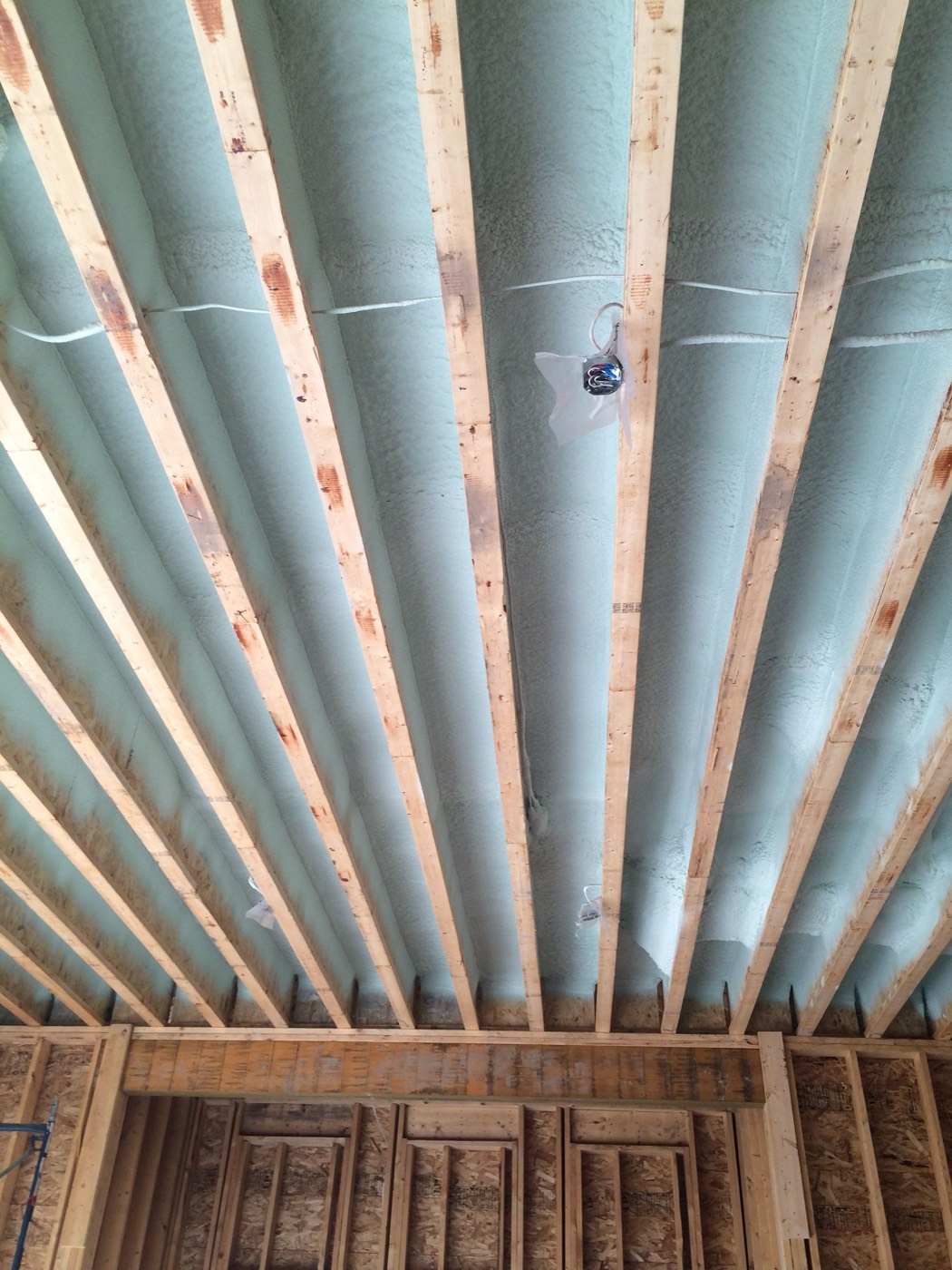
Heating an uninsulated shop is like heating the driveway. Here is how to make a garage, shop or outbuilding practical to keep warm.
The detached shop is one of the most common calls we get, and it usually arrives the same way: somebody put a heater in, ran it for a month, saw the propane or hydro bill, and turned it off again.
An uninsulated outbuilding cannot be heated economically. Not with a bigger heater, not with a better heater. The heat leaves as fast as you make it, and the only way to change that is the envelope.
Start with the ceiling
Heat rises, so the ceiling or roof plane is where the most heat is leaving and where the first dollar should go. In a shop with an open truss roof you have a choice: insulate the flat ceiling plane if there is one, or insulate the underside of the roof deck and bring the whole volume inside the envelope.
Which one is right depends on whether you use the overhead space for storage, whether there is mechanical equipment up there, and how the building is ventilated. We work that out on site rather than assuming.
Then the walls — and the door you forgot about
Shop walls are often steel or wood framing with no cavity insulation and no air barrier. Both need solving, and in a metal building the air sealing is frequently the bigger win.
Then there is the overhead door. It is usually the single largest uninsulated surface in the building, and no amount of wall work compensates for it. If you are serious about heating the space, an insulated door with decent perimeter weatherstripping belongs in the plan.
Irregular buildings: Quonsets, barns and pole structures
Arched and pole buildings are where spray foam stops being one option among several and becomes the practical one. There are no neat rectangular cavities to fill — the surface curves, the framing is exposed, and the girts or purlins run across everything.
Foam follows the shape. It bonds to steel or wood, seals every seam and fastener penetration as it goes, and gives a continuous layer with no thermal bridge at every rib.
Condensation is the problem people do not see coming
In a steel building, the underside of the roof is a cold surface. Warm, moist air from a heater, a vehicle bringing in snow, or a compressor hits that surface and condenses. Then it drips — on your tools, your vehicles and your project.
Closed-cell foam is effective here precisely because it is not only insulation. At normal installed thickness it acts as a vapour retarder and it eliminates the cold surface, so there is nowhere for condensation to form. Fibre insulation on its own, without careful vapour and air control, can actually make a metal building's condensation worse by hiding the problem from view while it drips behind the insulation.
The slab, if you are still at the planning stage
If the building is not built yet, insulate under the slab. A concrete floor in direct contact with the ground is a permanent heat sink, and it is the one part of the building you can never go back and fix. Under-slab insulation is also what makes in-floor heating worth installing at all.
We have sprayed shop floors ahead of the pour, and it is one of those decisions people are glad about a decade later.
Matching the build to how you use it
The right specification depends entirely on how the space gets used:
- Heated occasionally — a woodworking shop used on weekends needs a building that warms up quickly, which means air sealing first.
- Held at a steady temperature — a space with equipment, finishes or stored vehicles that must not freeze needs continuous coverage and no cold spots.
- Working commercial or agricultural space — durability and moisture control matter more than a perfect finish, and coverage over irregular framing is the priority.
Getting it quoted
We insulate garages, shops, barns, pole buildings, Quonset structures and commercial buildings throughout Barrie, Simcoe County and the Kawartha Lakes area. Tell us how you want to use the space and how it is heated, and we will quote the envelope that makes that realistic — including telling you which parts can wait.
Questions about your own building? Call (705) 812-1955 or request a free quote — we serve Barrie, Simcoe County & the Kawartha Lakes area.